


Bainbridge heritage timeline
Roots and resilience
Trace Bainbridge stories across generations, with global context milestones woven into the same journey.
Explore & filter timeline25 moments
Showing 25 of 25 moments
Swipe sideways to explore more moments.
Global context
1882
Chinese Exclusion Act
US federal law bars most Chinese labor immigration, reshaping Pacific labor routes and setting the stage for new migration patterns in Puget Sound.

Global context
1898
US rule in the Philippines
Following the Spanish-American War, Spain cedes the Philippines to the United States. US colonial rule shapes Filipino migration to Hawaii and the mainland.

Global context
1907
Gentlemen's Agreement
An agreement between the United States and Japan limits Japanese labor immigration, shaping migration to communities already on the West Coast.

Global context
1914
World War I Begins
Global war reshapes labor, shipping, and migration patterns that also affect West Coast communities.

Global context
1924
Immigration Act of 1924
The Immigration Act bars immigrants ineligible for citizenship, excluding Japanese immigrants and many others from Asia and separating families across borders.
Global context
1929
Great Depression
The global economic collapse tightens markets, wages, and access to credit for immigrant farm families.
Global context
1939
World War II Begins
War in Europe and Asia accelerates military planning and xenophobic policies that soon impact Japanese Americans.
Global context
Dec 7, 1941
Attack on Pearl Harbor
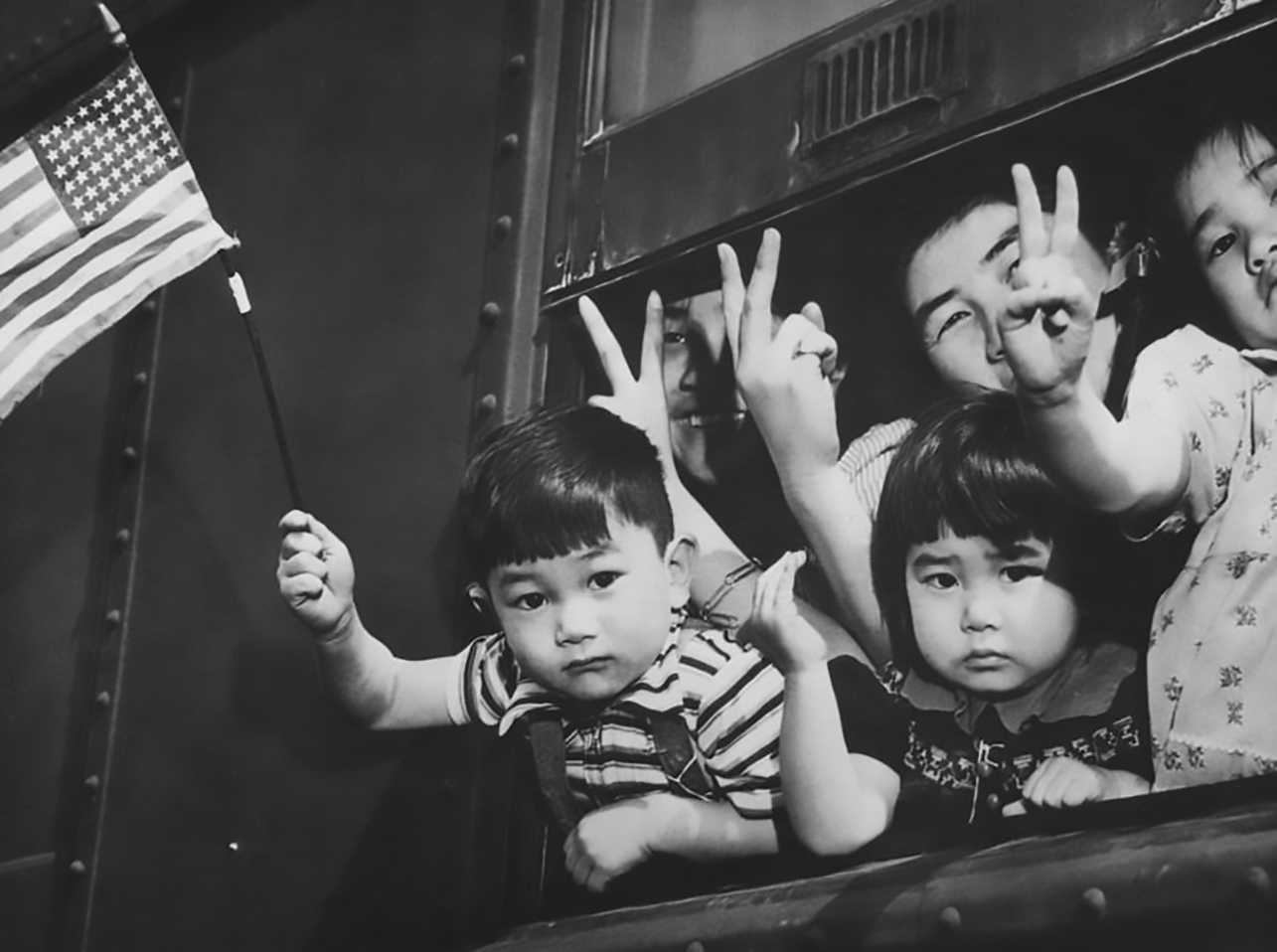
Japan's attack on Pearl Harbor brings the United States into World War II. Japanese Americans face intensified racism and government restrictions, regardless of citizenship.


Global context
1945
World War II Ends
World War II ends. Japanese American families continue returning from incarceration and rebuilding their lives after years of forced displacement.
Global context
1964
Civil Rights Act
Landmark legislation outlaws discrimination, fueling the wider Asian American movement for civil rights and redress.
Global context
1965
Hart-Celler Act
Abolishes the quota system based on national origins, allowing a new wave of Asian immigration to the US.
Global context
1969
Moon Landing
Apollo 11 astronauts land on the Moon, and people around the world watch the first lunar walk.
Global context
1970s
Asian American Movement
Asian American activists build on organizing from the late 1960s, advocating for civil rights, ethnic studies, and recognition of their communities' histories.

Global context
1989
Fall of the Berlin Wall
The opening of the Berlin Wall becomes a symbol of the Cold War's end and the reunification of families separated by the border.

